
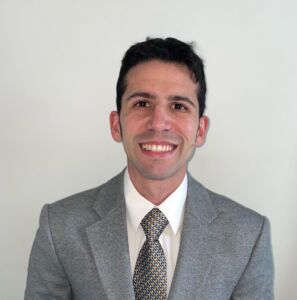
I help bottlenecked middle managers move from reactive chaos to calm, shared ownership by building the systems and habits they need to lead sustainably.
The Crisis That Changed Everything
Early in my career at GSK, I started as an Associate Scientist in Downstream Process Development. By March 2020, just seven months in, I was struggling. Falling behind peers who seemed to move effortlessly through the same work. The sheer overwhelm of staring at a computer screen trying to write a report and going nowhere. I looked at them, looked at myself, and landed on a thought I couldn’t shake: this isn’t normal.
That thought sent me looking for answers, at work, and in my life. Because it wasn’t just the job. It was the feeling that I couldn’t keep up with things that everybody else seemed to manage just fine.
ADHD as the Turning Point
About ten months after that near-PIP moment, I got diagnosed with combined-type ADHD. Suddenly, things were making sense.
The struggle to concentrate. The deadlines slipping. The chaos. The overwhelm. Looking back, I’d been coping my entire life, smart enough to coast through grade school without needing systems that worked for me. But as life’s demands rose, my ability to cope became less and less, and my ADHD became more and more apparent. I struggled through college and grad school. My corporate career was just the moment it finally broke through.
I wasn’t broken. I was neurodivergent and didn’t know it.
That diagnosis became the catalyst for everything that followed. Instead of pushing harder, I rebuilt how I worked. One piece at a time. Within a year, I went from a struggling performer to a trusted cross-functional leader, not because I became a different person, but because I finally had systems that matched my working style.
That experience taught me something critical: productivity isn’t about willpower or hacks. It’s about systems designed to work for you. And inclusion isn’t corporate policy. It’s how you actually work with different people, every day.
Learning to Conduct, Not Carry
After that reset, I didn’t stumble into my next opportunity. A hiring director sought me out after watching me deliver a town hall presentation. She asked me to apply for a Data Manager role, one I might not have pursued on my own.
That told me something: when you show up with clarity, people notice.
The Data Manager role was a highly matrixed, cross-functional position. My director showed me something that changed how I saw leadership: the best leaders don’t carry the work. They conduct it. They build systems so the team moves without them being the bottleneck.
I carried that insight forward when another hiring manager reached out, this time emailing me the job requisition directly for a Production Supervisor role. That’s not a coincidence. That’s a pattern. When I transitioned into that role, leading a team of eight across multiple functions and stakeholders, I replaced a whiteboard-based tracking system with a digital Kanban-style board, clarified workflows, and built the kind of predictable rhythms that let people move confidently without constantly checking in with me.
But here’s what I realized: I’d learned how to lead myself and my team through lived experience. My director showed me a crucial part of it, but ultimately, nobody teaches you how to lead yourself. You have to figure that out. Most leaders never get that education. They get promoted because they were great at their job, not because anyone taught them how to lead. That gap became PXIL.
Building Capacity and Leverage
Today, I work with bottlenecked middle managers who feel overwhelmed, reactive, or stretched thin, and help them move toward clarity, calm, and shared ownership.
PXIL is built on a simple belief: productivity and inclusion aren’t separate efforts. Productivity creates capacity: the mental and emotional space to lead. Inclusion creates leverage: a team that carries ownership with you. Together, they’re how leaders stop firefighting and start conducting.
Companies spend millions on inclusion training and eliminating back-to-back meetings. Managers never get taught how to actually use any of it on Monday morning. That’s the gap PXIL fills.
Through PXIL, I help leaders:
- Quiet the noise and reclaim focus
- Build systems to save brain power for what’s actually important
- Delegate outcomes instead of tasks
- Create the psychological safety and clear communication their team needs to thrive
- Lead with intention, fairness, and calm, not extraction
My mission is simple: equip leaders with the mental clarity, structure, and inclusive habits they need to lead sustainably, not by working harder, but by leading with intention.
The Teacher, The Builder, The Optimizer
Outside of work, I design custom stepcharts for DDR and share them on my YouTube channel. It’s the same impulse: taking something complex, breaking it into intentional, repeatable patterns, and making it accessible to others. That’s what systems design is. That’s what coaching is.
I dance salsa and bachata. Started in college and never stopped. I’ve taught it too, which means I still get asked at parties. I never say no.
I’m also into real-time strategy games – the kind where you’re managing resources, building systems, and making decisions under pressure. At the end of the day, I’m an optimizer. I can’t help it. It shows up everywhere.
If you’re ready to stop carrying it all, let’s talk.
Don’t be that CMO with 25,000 unread emails. Over 44% of my emails skip my inbox, see how in 20 seconds.
Enter your name and email and I’ll send you the link to a video showing you how to start skipping emails.